What Should UAE Employers Look for in an Integrated Attendance and Payroll System?
What Should UAE Employers Look for in an Integrated Attendance and Payroll System?
Managing employee attendance and payroll separately can create unnecessary work for UAE businesses. HR teams may need to transfer working hours from attendance spreadsheets into payroll software, reconcile leave records, verify overtime, and correct salary calculations caused by incomplete or inaccurate data.
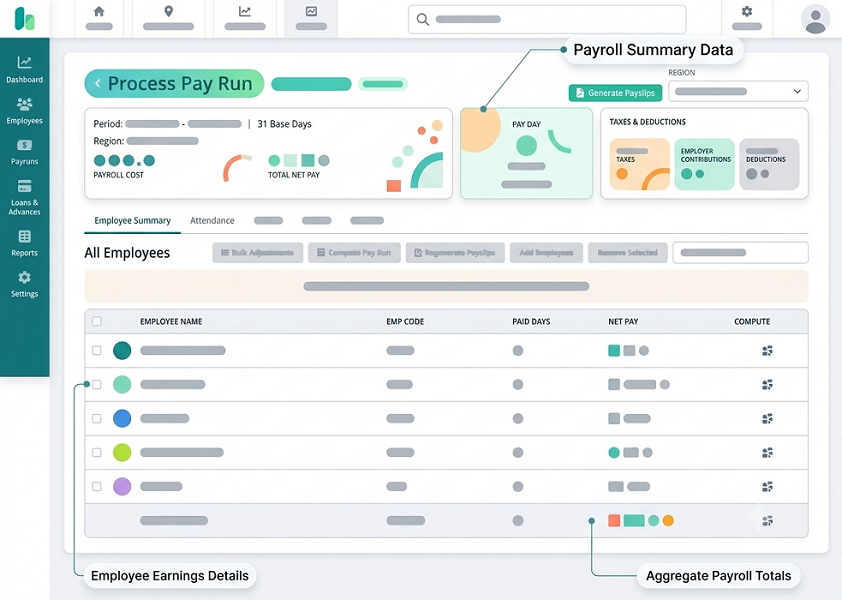
An integrated attendance and payroll system connects these processes in one workflow. It helps businesses capture working hours, manage shifts, approve leave, validate overtime, and transfer verified attendance information into payroll calculations. When properly configured, it can reduce manual errors, improve payroll visibility, and help employers maintain consistent employee records.
However, choosing the right system involves more than comparing features. UAE employers should evaluate local payroll requirements, attendance flexibility, data security, reporting capabilities, integration options, and the system's ability to grow with the business.
1. Automated Attendance Tracking
The foundation of an integrated system is reliable attendance capture. Employers should look for software that supports the attendance methods appropriate to their workforce.
Useful options include:
- Biometric or facial recognition terminals.
- Mobile clock-in and clock-out.
- Web-based attendance portals.
- GPS-linked attendance for authorised field work.
- Geo-fencing for designated work locations.
- Manual attendance corrections with approval controls.
A business with fixed office hours may prefer attendance terminals, while a field service company may need mobile attendance at customer locations. Employers with multiple branches should be able to manage different attendance methods from one central platform.
The system should also identify missing clock-ins, forgotten clock-outs, duplicate entries, and unusual working hours. These exceptions should be reviewed before the information reaches payroll.
2. Flexible Shift and Working-Hours Management
UAE businesses may employ staff on fixed schedules, rotating shifts, overnight shifts, split shifts, or flexible working arrangements. The attendance system should support these patterns without requiring constant manual adjustments.
Look for features such as:
- Multiple shift templates.
- Overnight shift handling.
- Shift swaps and approval workflows.
- Break and rest-period configuration.
- Late arrival and early departure tracking.
- Weekly and monthly working-hour reports.
- Public holiday and special schedule configuration.
- Employee assignment across multiple branches or job sites.
For example, a hospitality business may have employees working different shifts every week. The system should compare actual attendance against the approved roster and identify exceptions automatically.
Employers should verify that working-hour and overtime rules can be configured for the applicable employee categories and employment arrangements. The UAE Government provides official guidance on private-sector working hours and overtime, including circumstances in which specific rules or exceptions apply.
3. Seamless Attendance-to-Payroll Integration
One of the most important features is the ability to transfer approved attendance information directly into payroll.
Without integration, HR or payroll staff may need to copy attendance totals into spreadsheets or manually enter payroll adjustments. This increases the risk of incorrect working hours, duplicate entries, and missed overtime.
A suitable system should connect attendance with:
- Employee master records.
- Approved working hours.
- Leave and absence records.
- Overtime and shift differentials.
- Unpaid leave and other authorised adjustments.
- Payroll earnings and deductions.
- Employee salary structures.
The system should not automatically treat every missing punch as an absence or every additional hour as approved overtime. It should apply configured rules and flag records that require verification.
Employers should also ask whether changes made after payroll approval are tracked and whether corrected data can be processed through a controlled adjustment workflow.
4. UAE Payroll and Wage Payment Support
A system designed for UAE businesses should support the employer's actual payroll process and applicable legal obligations.
Before purchasing software, check whether it can accommodate:
- Employee salary structures and allowances.
- Basic salary and other earnings as separate components.
- Approved deductions and adjustments.
- Overtime calculations based on applicable rules.
- Mid-month joining and leaving calculations.
- Final settlement workflows.
- Leave balances and eligible leave payments.
- Payroll reports and payment files in the required format.
- Relevant Wage Protection System (WPS) requirements, where applicable.
Employers should confirm that the provider supports the specific payroll and payment workflows they use. WPS-related capabilities, file formats, and validation processes should be demonstrated rather than assumed.
For applicable UAE private-sector employers, the Wage Protection System supports the monitoring of wage payments through approved channels. Employers should verify the current requirements for their establishment and employee category through official guidance.
Software can support compliance, but it cannot guarantee compliance on its own. Employers remain responsible for reviewing configurations, employment terms, payroll calculations, and required payment procedures.
5. Leave and Absence Management
Attendance and leave should be connected to avoid conflicting records.
For example, an employee may have approved annual leave in the HR system but appear as absent in the attendance report. If the systems do not communicate, payroll staff may need to investigate the discrepancy manually.
A suitable platform should provide:
- Online leave applications.
- Manager approval workflows.
- Leave balance calculations.
- Annual and sick leave records.
- Unpaid leave tracking.
- Holiday calendars.
- Absence alerts and exception reports.
- Integration of approved leave with payroll.
Employers should confirm that leave entitlements and calculations can be configured according to applicable employment rules and company policies.
A clear audit trail should show when leave was requested, approved, changed, or cancelled. This helps HR and payroll teams resolve discrepancies before the payroll cutoff.
6. Overtime and Payroll Exception Management
Overtime can be a major source of payroll disputes when actual working hours, approved schedules, and payroll rules do not match.
An integrated system should allow employers to establish an overtime approval process and identify hours that need review.
Important capabilities include:
- Pre-approval for overtime where required by company policy.
- Recording of actual hours worked.
- Supervisor verification.
- Configurable overtime rules.
- Separate reporting for normal hours and overtime.
- Alerts for unusually long shifts.
- Exception reports before payroll finalisation.
For example, if an employee works beyond the scheduled shift, the system can flag the additional hours for the manager to review. Once verified, eligible hours can be passed into payroll using the appropriate configured rule.
Employers should ensure that internal approval procedures do not override applicable legal entitlements. The system should retain evidence of hours worked and provide a way to resolve disputed or incomplete records.
7. Employee Self-Service and Mobile Access
Employee self-service reduces routine HR queries and gives employees more control over their records.
A good system should allow employees to:
- View attendance and timesheets.
- Submit missed-punch corrections.
- Request leave.
- Review leave balances.
- Check payslips where available.
- View shift schedules.
- Track approval status.
- Update permitted personal information.
Mobile access is particularly useful for employees working at customer sites, construction projects, retail branches, or remote locations.
The interface should be easy to use, support the devices employees actually have, and provide clear error messages. Employers should also consider language support and accessibility requirements for a diverse workforce.
8. Data Security and Privacy Controls
Attendance and payroll systems contain sensitive employee information, including salary details, employment records, attendance history, and potentially biometric or location data.
UAE employers should assess how the provider protects this information and whether its processing arrangements meet the applicable legal requirements.
Look for:
- Role-based access controls.
- Multi-factor authentication where appropriate.
- Encryption in transit and at rest.
- Audit logs for sensitive actions.
- Secure employee authentication.
- Data backup and recovery procedures.
- Configurable data retention.
- Controlled exports and report access.
- Documented incident response procedures.
- Clear information about hosting, subprocessors, and data transfers.
Employers should apply the principle of least privilege: employees and managers should access only the records needed for their roles.
If the system uses facial recognition, GPS, or geo-fencing, the employer should evaluate whether that collection is necessary and proportionate. Location tracking should not extend beyond legitimate operational needs, and biometric information requires particular care.
The UAE's Personal Data Protection Law establishes a framework for personal data processing, subject to its scope, exclusions, and other applicable regimes. Certain free zones may have separate data protection laws. Employers should review which rules apply to their establishment and workforce.
9. Reporting, Analytics, and Audit Trails
An integrated system should provide more than attendance totals and payslips. Reports help managers identify recurring problems, monitor labour costs, and prepare for internal reviews.
Useful reports include:
- Daily attendance and absenteeism.
- Late arrivals and early departures.
- Overtime by employee or department.
- Missing timesheets and pending approvals.
- Leave balances and usage.
- Payroll variances between periods.
- Attendance-related salary adjustments.
- Employee costs by branch or project.
- Payroll processing and approval history.
Audit trails are equally important. The system should record who changed an attendance entry, approved overtime, modified a salary component, or finalised payroll.
For example, if an employee questions an overtime payment, HR should be able to trace the recorded hours, manager approval, configured calculation, and resulting payroll entry.
Reports should be exportable in practical formats, with access restrictions to protect confidential employee information.
10. Scalability and Multi-Location Support
A system that works for a small office may not meet the needs of a growing company with multiple branches, projects, or employee categories.
Employers should assess whether the platform can support:
- Multiple legal entities and branches.
- Different work schedules by location.
- Employee transfers between sites.
- Different approval hierarchies.
- Centralised payroll reporting.
- Multiple payroll groups and pay cycles.
- Increased employee numbers.
- Additional integrations as the business grows.
Businesses operating in the UAE should also check whether the software can handle the specific legal entities, employment categories, and payment arrangements in their organisation.
Ask the provider to demonstrate a realistic scenario involving multiple locations, shift changes, leave approvals, and payroll processing instead of relying only on a standard product presentation.
11. Integration With Accounting and Other Business Systems
Attendance and payroll software may need to exchange information with accounting systems, enterprise resource planning platforms, recruitment tools, or workforce management applications.
Before choosing a provider, confirm whether it supports the required integrations through native connectors, APIs, or secure file transfers.
Important integration questions include:
- Can payroll totals be posted to the accounting system?
- Can employee data be synchronised without duplicate records?
- Can attendance be linked to projects or cost centres?
- Are failed transfers reported clearly?
- Can data be reconciled before payroll is finalised?
- Are integration changes and errors logged?
- What happens when a connected system is unavailable?
Businesses should request a demonstration of the actual integrations they need and clarify whether additional implementation or maintenance fees apply.
12. Evaluate Total Cost, Support, and Implementation
The lowest subscription price does not necessarily provide the best value. Employers should consider the total cost of adopting and maintaining the system.
Evaluate:
- Licence and subscription fees.
- Setup and implementation charges.
- Attendance hardware costs.
- Integration and customisation fees.
- Employee training.
- Technical support availability.
- Data migration services.
- Ongoing maintenance.
- Costs of adding locations or employees.
Ask about implementation timelines, service availability, backup procedures, and support escalation. References from businesses with similar workforce sizes and operating models can help assess whether the provider is suitable.
Before committing, conduct a pilot with a representative group of employees and managers. Test attendance capture, missed-punch corrections, leave approvals, overtime, payroll calculations, reports, and payment-file preparation where relevant.
Practical Checklist for Choosing an Integrated System
| Evaluation area | What to verify |
|---|---|
| Attendance | Multiple clock-in methods and exception alerts |
| Scheduling | Rotating, overnight, and flexible shifts |
| Payroll | Accurate salary calculations and configurable rules |
| UAE requirements | Support for applicable payroll and WPS workflows |
| Leave | Connected balances, approvals, and payroll treatment |
| Overtime | Verification, approvals, and rule configuration |
| Employee self-service | Mobile access and payslip visibility |
| Security | Access controls, encryption, and audit logs |
| Privacy | Appropriate handling of biometric and location data |
| Reporting | Payroll variances, overtime, and attendance exceptions |
| Integration | Accounting, HR, and other required systems |
| Scalability | Multiple locations and growing employee numbers |
| Support | Training, implementation, and ongoing assistance |
Frequently Asked Questions
1. Why should UAE businesses integrate attendance and payroll?
Integration reduces duplicate data entry, helps reconcile working hours with salary calculations, and identifies attendance exceptions before payroll is finalised.
2. Does attendance software automatically ensure UAE payroll compliance?
No. Software can support calculations, records, and payment workflows, but employers must verify that the system is correctly configured for applicable rules, employee categories, and contractual terms.
3. Should attendance and payroll be managed in one platform?
A single platform can simplify administration, but connected specialist systems may also work well. The important factors are reliable integration, accurate data transfer, clear ownership, and a traceable approval process.
4. Can an integrated system manage multiple UAE branches?
Many platforms support multiple locations, schedules, and approval hierarchies. Employers should confirm that the selected product supports their specific organisational structure and reporting needs.
5. What security features should employers prioritise?
Role-based access, strong authentication, encryption, audit logs, secure backups, and controlled data retention are important. Biometric and location-based features should be assessed carefully for necessity, security, and applicable privacy requirements.
6. How can companies test an attendance and payroll system before buying it?
Run a pilot using real-world scenarios, including missed punches, shift changes, overtime approvals, leave, mid-month joining, employee exits, and payroll reconciliation. Confirm that the resulting calculations and reports match the company's approved rules.
Conclusion
UAE employers should choose an integrated attendance and payroll system that combines reliable attendance capture, flexible shift management, leave and overtime workflows, accurate payroll calculations, employee self-service, strong security, and useful reporting.
The platform should support the employer's actual payroll and payment requirements, integrate with existing business systems, and provide an auditable process for correcting errors. Employers should also assess privacy implications and ensure that the system is configured for the applicable legal framework.
By testing realistic scenarios before implementation and reviewing the system regularly, businesses can reduce manual work, improve payroll accuracy, and create a more dependable process for employees, HR teams, and finance departments.
A connected system should make each approved hour traceable into pay. InnBuilt Attendance and Payroll Software can give UAE teams one workflow for shifts, leave, exceptions and payroll review.