How Can UAE Employers Manage Payroll for Employees Joining Mid-Month?
How Can UAE Employers Manage Payroll for Employees Joining Mid-Month?
Introduction
When an employee joins a company in the middle of a month, the payroll team must calculate the salary payable for the period between the employee's joining date and the end of the payroll cycle. This process may appear straightforward, but it can become complicated when the employee has allowances, variable pay, attendance adjustments, or a different payroll cut-off date.
For UAE businesses, accurate mid-month payroll processing is essential for maintaining employee trust, controlling payroll costs, and ensuring salaries are paid on time. Errors in the first salary payment can also lead to employee queries, reconciliation work, and avoidable payroll disputes.
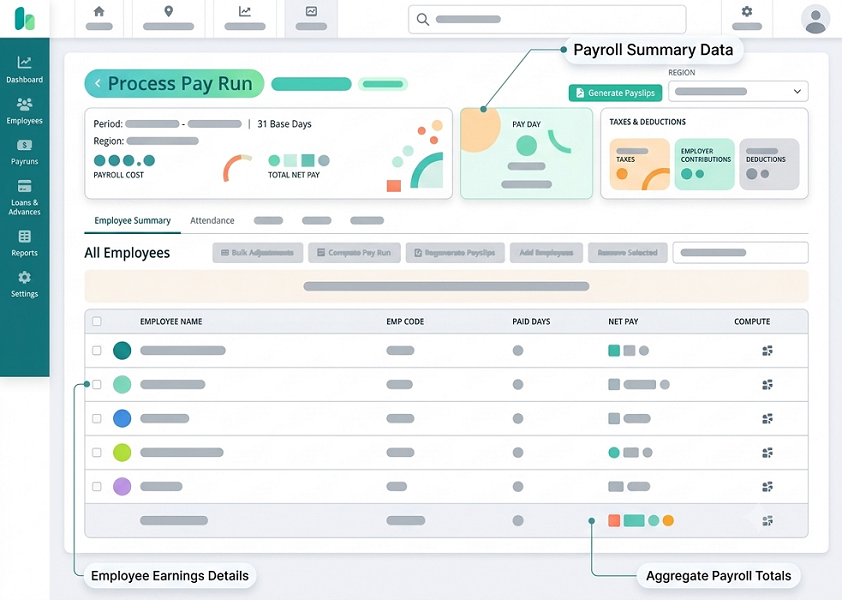
Payroll software helps HR and finance teams manage joining dates, calculate prorated salary amounts according to approved company rules, validate employee records, and prepare accurate salary payments.
1. Verify the Employee's Joining Date and Employment Contract
The first step is to confirm the employee's official employment start date. Payroll should use the verified date on which the employee's employment begins, rather than relying only on the date the offer was accepted or the employee attended an informal orientation session.
Before calculating salary, HR should verify:
- Employment contract and agreed salary.
- Official joining date.
- Basic salary and applicable allowances.
- Salary frequency and payroll period.
- Working schedule and weekly rest days.
- Approved payroll cut-off date.
- Any applicable variable-pay arrangements.
- Relevant work permit and employment documentation.
The UAE's private-sector employment framework requires employment contracts to specify relevant employment terms, including the start date and salary. Employers should ensure that payroll records agree with the applicable contract and approved employment documentation.
For example, if an employee joins on 16 October, HR should confirm that 16 October is the approved start date and that the employee's salary package has been entered correctly before calculating the first payment.
2. Choose a Consistent Salary Proration Method
Salary proration determines how much of a monthly salary is payable when an employee works for only part of a payroll month.
Businesses should establish a documented, legally reviewed calculation method that is consistent with applicable requirements, employment terms, and company policy. Employers should not assume that one formula is universally mandatory for every UAE employment arrangement.
Two methods commonly used in payroll calculations are calendar-day proration and working-day proration.
These methods can produce different results. Employers should use the method applicable to their approved policy and contract rather than switching between formulas from month to month.
The calculation should also define whether the monthly salary means the total contractual salary or a particular component. Where allowances or other payments have separate eligibility rules, those rules should be applied transparently.
3. Calculate the First Salary With a Clear Example
Consider an employee who joins a UAE company on 16 October 2026 with a monthly salary of AED 9,000.
Assume the company uses a calendar-day method, counts the joining date as an eligible day, and prorates the full monthly salary across the calendar days in October.
October has 31 calendar days. The eligible period from 16 October through 31 October contains 16 calendar days.
The illustrative prorated gross salary is AED 4,645.16, before any valid adjustments or other payroll components.
This example explains one calculation method; it does not establish a universal statutory formula for all UAE employers. The applicable method should be verified against the employee's terms and company policy.
Payroll software can automate this calculation once the correct salary basis, joining date, eligible period, and proration rules have been configured.
4. Calculate Basic Salary and Allowances Correctly
An employee's monthly package may include basic salary, housing allowance, transport allowance, communication allowance, and other contractual payments.
HR should not automatically assume that every component follows the same calculation rule. The company should document whether each component is prorated, payable only when certain conditions are met, or governed by another contractual arrangement.
For example, an employee's package might be structured as follows:
| Salary component | Monthly amount |
|---|---|
| Basic salary | AED 5,000 |
| Housing allowance | AED 2,500 |
| Transport allowance | AED 1,000 |
| Other fixed allowance | AED 500 |
| Total monthly package | AED 9,000 |
If the applicable policy requires all four components to be prorated proportionately, payroll can calculate each component using the same eligible-day ratio. If a component has a different contractual rule, the system should apply that rule instead.
Accurate component-level calculations also help payroll teams maintain clear salary records for overtime calculations, benefits administration, and other purposes where the relevant salary definition matters.
5. Align Joining Dates With Payroll Cut-Offs
Many companies close payroll several days before salaries are paid. This allows HR to verify attendance, approve changes, prepare payment files, and resolve exceptions.
However, employees may join after the cut-off date or have their employment records completed late. Without a defined process, their first salary may be missed from the regular payroll run.
Employers should establish procedures for:
- Employees joining before the monthly cut-off.
- Employees joining after the cut-off.
- Late submission of employment documents.
- Delays in entering salary details into the payroll system.
- Corrections to the joining date.
- Approved supplementary payroll runs, where necessary.
For example, if payroll closes on 25 October but an employee joins on 28 October, HR should determine whether the employee can be included in the regular run or needs another approved processing arrangement.
The cut-off date is an internal administrative control. It should not be used as a reason to disregard the employer's obligation to pay wages when they are due.
6. Account for Attendance, Leave, and Unpaid Absence
The first payroll calculation should reflect the employee's actual employment period and any relevant attendance adjustments.
A new employee may join partway through a month, attend induction sessions, take approved leave, or have an absence recorded during the first few weeks.
Payroll teams should distinguish between:
- The period before the employee's official start date.
- Eligible employment days.
- Actual working days and rest days.
- Approved paid leave.
- Unpaid leave or other authorised unpaid absence.
- Missing attendance records requiring investigation.
An approved paid leave day should not automatically be treated as an unpaid day. Similarly, payroll should not deduct salary for a missing clock-in without checking whether the employee attended work and whether the attendance record requires correction.
Integrating attendance and leave management with payroll software helps reduce manual adjustments and provides a clear record of how the first salary was calculated.
7. Include Overtime, Incentives, and Other Variable Payments
New employees may become eligible for overtime, commissions, performance incentives, shift allowances, or reimbursements during their first month.
These items should be processed according to their applicable eligibility rules and approval procedures. They should not be added or prorated automatically simply because the employee has a partial-month salary.
For example, if an employee joins on 16 October and qualifies for approved overtime later that month, payroll should calculate the relevant overtime separately using the applicable rules. The overtime amount should not be assumed to follow the same proration method as the monthly base salary.
Employers should also ensure that variable payments are assigned to the correct earning period, especially when the payroll cut-off occurs before the end of the month.
8. Prepare the First Salary Payment Under UAE Wage Rules
Payroll teams must distinguish between calculating the correct amount and paying it by the required deadline.
For private-sector establishments subject to the UAE's Wage Protection System, employers must follow the applicable wage-payment requirements and use the required payment channels. The UAE Government's published guidance, updated in 2026, refers to Ministerial Resolution No. 340 of 2026 concerning the Wage Protection System and the timing of salary payments.
Employers should verify the current rules applicable to their establishment and employee category rather than relying on an outdated payroll calendar.
Before releasing the first salary payment, payroll should confirm:
- The employee is correctly registered in the payroll system.
- The approved salary and joining date match the employment records.
- The prorated amount has been checked.
- Relevant allowances and approved adjustments are included.
- The payment file contains the correct employee and bank details.
- Any required WPS or other payment-process checks have been completed.
- The employee's payslip or salary breakdown can be provided.
A payroll cut-off should be managed through advance planning and exception handling, not by delaying wages beyond the applicable due date.
9. Automate Mid-Month Payroll Calculations With Software
Manual spreadsheets can work for a small workforce, but they become harder to manage when multiple employees join in different locations or payroll cycles.
Payroll software can simplify the process by connecting employee records, salary structures, attendance, leave, and payment information.
Useful features include:
- Automatic proration based on the approved method.
- Joining-date validation.
- Separate rules for basic salary and allowances.
- Attendance and leave integration.
- Payroll cut-off alerts.
- Approval workflows for salary corrections.
- Exception reports for missing employee data.
- Payslip generation and payroll history.
- Export or integration with supported payment systems.
Automation can reduce arithmetic errors, but it cannot determine the correct legal or contractual treatment if the underlying rules have been configured incorrectly. HR should review the policy, test calculations, and check unusual cases before relying on automated processing.
10. Maintain an Audit Trail for the First Salary
The first salary is an important payroll record because it establishes how the employee's contractual pay was applied from the start of employment.
Employers should retain relevant documentation, including:
- Signed employment contract and salary details.
- Approved joining date.
- Proration method and calculation.
- Attendance and leave records.
- Approved allowances and variable payments.
- Payroll review and approval history.
- Payslip and payment confirmation.
- Any correction or supplementary payment record.
If the employee questions the amount, payroll should be able to explain the eligible period, calculation basis, and each salary component without recreating the calculation from scratch.
A documented audit trail also helps HR identify recurring onboarding delays and improve payroll cut-off procedures.
Example: A UAE Company Hiring Several Employees Mid-Month
Consider a company in Abu Dhabi that hires five employees between the 10th and 24th of a month. Their salaries differ, and some are eligible for fixed allowances.
Previously, payroll administrators calculated each first salary manually. One employee's joining date was entered incorrectly, while another employee's allowance was omitted from the calculation.
The company introduces a structured payroll workflow:
- HR records each employee's approved joining date and contractual salary.
- Payroll validates salary components and the applicable proration rules.
- The system calculates the eligible salary for the first payroll period.
- Attendance and approved adjustments are checked.
- A payroll reviewer investigates exceptions.
- Approved amounts are included in the relevant salary payment process.
- Payslips and supporting records are retained.
This workflow reduces repetitive calculations, makes salary differences easier to explain, and helps payroll teams identify incomplete onboarding records before payment processing.
Frequently Asked Questions
1. How is salary calculated when an employee joins in the middle of a month in the UAE?
The salary is calculated according to the applicable contract, approved company policy, and relevant legal requirements. Employers may use a documented calendar-day or working-day method, but should verify the correct method for their circumstances rather than assuming one formula applies universally.
2. Is salary always divided by 30 for a mid-month joining calculation?
No universal 30-day formula should be assumed for every situation. The divisor and eligible period should follow the applicable calculation policy and contractual requirements. Payroll teams should document and apply the method consistently.
3. Should allowances be prorated when an employee joins mid-month?
It depends on the allowance, employment terms, and applicable policy. Employers should define the treatment of each salary component and configure payroll software accordingly.
4. What happens if an employee joins after the payroll cut-off date?
HR should follow the company's approved exception or supplementary payroll procedure and ensure that wages are paid by the applicable due date. A missed internal cut-off does not automatically remove the employer's payment obligations.
5. Can payroll software automatically calculate prorated salaries?
Yes. Software can calculate prorated amounts using configured joining dates, salary components, eligible days, and calculation rules. HR should verify the underlying rules and review exceptions before approving payroll.
6. Does an employee's first salary include overtime?
Eligible overtime should be calculated separately according to applicable rules and approved records. It should be included in the relevant payroll process based on the correct earning period and payment requirements.
7. How can employers avoid errors in first-month payroll?
Employers should validate joining dates, confirm salary components, use a documented proration method, integrate attendance and leave data, review exceptions, and maintain a record of the final calculation and payment.
Conclusion
Managing payroll for employees joining mid-month requires accurate employment records, a consistent salary proration method, clear allowance rules, and coordination between HR and finance.
For UAE employers, the process should also account for payroll cut-off dates, applicable wage-payment requirements, attendance adjustments, and the correct treatment of variable payments.
Payroll software can automate calculations and improve visibility, but accurate results depend on properly configured rules and careful review. By standardising onboarding and first-salary procedures, businesses can reduce payroll errors, improve employee confidence, and maintain more reliable salary records.
A mid-month start requires accurate employment and attendance dates. InnBuilt Payroll Software can help UAE teams identify the payable period and verify the new starter's first payroll inputs.