What Are the UAE Midday Break Rules for Outdoor Workers?
What Are the UAE Midday Break Rules for Outdoor Workers?
The UAE has specific midday break requirements designed to protect workers from the health risks associated with working outdoors during periods of extreme summer heat. HR teams, employers, and site managers need to plan work schedules around the annual midday break and ensure that outdoor employees are not required to work during the restricted period.
What Is the UAE Midday Break?
The UAE's midday break, commonly known as the Midday Break, restricts work performed under direct sunlight and in open areas during the hottest part of the summer.
The rule generally applies during the summer months and is announced annually by the UAE authorities. Employers must check the official dates and timings applicable to each year rather than relying on previous schedules.
The restriction primarily covers work performed in open areas where employees are exposed to direct sunlight and high temperatures.
When Does the Midday Break Apply?
The exact dates and hours are announced by the UAE authorities each year. During the applicable period, employers must stop covered outdoor work during the prescribed midday hours.
Because the timing can change from year to year, HR teams should verify the current Ministry of Human Resources and Emiratisation (MOHRE) announcement before creating employee schedules.
Which Workers Are Typically Affected?
The midday break is particularly relevant to employees whose jobs require outdoor or open-area work, including:
- Construction workers
- Road and infrastructure workers
- Landscaping employees
- Building maintenance teams
- Outdoor cleaning workers
- Agricultural workers
- Delivery and logistics workers performing outdoor duties
- Utility and installation workers
- Workers at outdoor project sites
Employers should assess the actual working environment rather than relying only on an employee's job title.
What Should Employers Do During the Break?
Employers should reorganize outdoor work so employees are not required to perform restricted work during the prescribed midday period.
HR and site managers should:
- Adjust employee schedules before the summer period.
- Communicate the break timings to workers and supervisors.
- Stop covered outdoor activities during the restricted hours.
- Provide appropriate shaded or cooled rest areas.
- Ensure employees have access to drinking water.
- Plan work before or after the restricted period.
- Monitor attendance and work schedules.
- Train supervisors to identify heat-related risks.
The break should be incorporated into workforce planning rather than treated as an attendance exception after the fact.
Are All Outdoor Activities Prohibited?
Not necessarily. The midday-break rules contain specific exemptions for certain essential or technical activities that cannot reasonably be postponed or that require urgent intervention.
Employers should review the current annual MOHRE requirements to determine whether a particular activity qualifies for an exemption. Where exempt work must continue, employers may have additional obligations relating to worker protection, safety measures, and documentation.
How Can HR Manage Attendance During the Midday Break?
Attendance management becomes particularly important for organizations with large outdoor workforces.
HR can configure separate schedules for:
- Morning outdoor shifts
- Afternoon shifts
- Evening shifts
- Split shifts
- Construction-site workers
- Maintenance teams
- Field employees
- Emergency or exempt work
An automated attendance system can compare scheduled working hours with actual clock-in and clock-out records. This can help HR identify whether employees were incorrectly scheduled during restricted hours.
Managing Multiple Worksites
Construction and infrastructure companies may have employees working across multiple UAE locations. HR should maintain centralized visibility of schedules at each site.
A workforce management system can help managers:
- Assign site-specific shifts
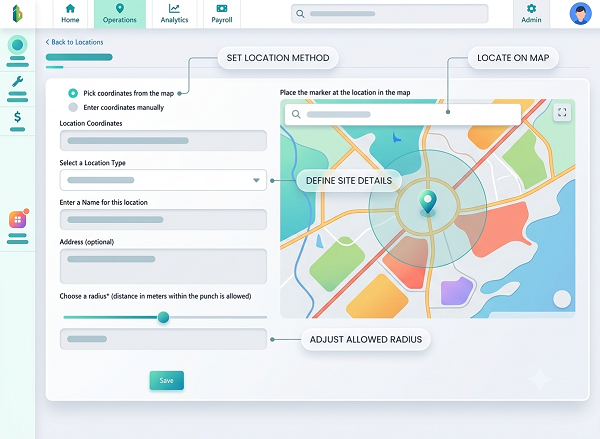
- Track attendance by location
- Monitor working hours
- Record shift changes
- Identify attendance exceptions
- Maintain workforce reports
This is particularly useful when employees move between project sites.
Heat-Safety Measures Beyond the Midday Break
The midday break should not be viewed as the only heat-protection measure. Employers should maintain broader occupational health and safety practices for employees working in hot conditions.
Depending on the work environment, employers may provide:
- Drinking water
- Shaded rest areas
- Suitable protective equipment
- Heat-stress awareness training
- First-aid support
- Appropriate work-rest arrangements
- Emergency procedures
Supervisors should also be trained to recognize signs of heat exhaustion and heat-related illness.
How Does the Midday Break Affect Payroll?
HR should ensure that the midday break does not create incorrect payroll deductions or attendance penalties. The treatment of working time should follow the applicable UAE labour requirements and the employee's approved work schedule.
If employees work different shifts before and after the restricted period, attendance software can help calculate scheduled hours accurately and transfer the relevant data to payroll.
What Should HR Keep on Record?
Employers should maintain appropriate records relating to:
- Employee schedules
- Attendance
- Shift changes
- Outdoor work assignments
- Overtime
- Safety measures
- Heat-safety training
- Approved exceptions
- Site-level workforce arrangements
Accurate records can help employers demonstrate that appropriate procedures were followed.
Conclusion
The UAE midday break is an important workplace heat-protection requirement for employees working outdoors during the summer. HR teams should plan schedules in advance, communicate the applicable restrictions, provide appropriate heat-safety measures, and monitor attendance across worksites.
For companies managing large outdoor or field-based teams, automated attendance and workforce management software can simplify shift planning, location-based attendance tracking, exception management, and payroll integration while helping HR maintain better records of working hours and compliance.
Outdoor crew schedules require seasonal planning. InnBuilt Field Management can help UAE supervisors organise permitted work windows, breaks and site attendance while retaining evidence for review.