How Can UAE Oil and Gas Contractors Manage Remote Site Attendance?
How Can UAE Oil and Gas Contractors Manage Remote Site Attendance?
Oil and gas contractors in the UAE often deploy employees across remote and restricted-access locations, including drilling areas, processing facilities, pipeline projects, maintenance sites, fabrication yards, and offshore or desert operations. Managing attendance in these environments can be challenging because employees may work in rotating shifts, travel long distances, operate in areas with limited connectivity, and work across multiple project sites.
Traditional office-based attendance methods may not provide reliable visibility in these conditions. A digital workforce management system can help contractors manage site assignments, record attendance, monitor shift coverage, handle offline check-ins, and connect working hours with payroll.
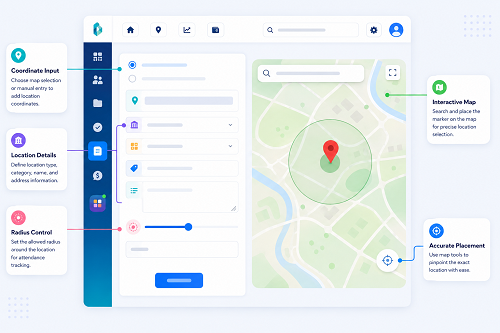
1. Create a Centralized Remote-Site Structure
The first step is to organize all remote locations within a centralized system.
Each site can include:
- Project name
- Site location
- Client
- Worksite or facility
- Department
- Shift pattern
- Assigned workforce
- Site supervisor
- Access requirements
- Project or cost centre
This structure allows contractors to assign employees to the correct location and monitor attendance across multiple projects.
2. Assign Employees to Specific Sites and Shifts
Employees should receive clear assignments before travelling to a remote location.
For example:
| Employee | Project Site | Role | Shift |
|---|---|---|---|
| Technician A | Pipeline Project | Mechanical Technician | 7 AM–7 PM |
| Technician B | Processing Facility | Electrical Technician | 7 PM–7 AM |
| Worker C | Maintenance Site | Operator | 6 AM–6 PM |
The schedule can then be compared with actual attendance.
This helps managers identify whether the correct workforce is available for each shift.
3. Use Mobile Attendance at Remote Locations
Mobile attendance can be useful when employees do not have access to a conventional office attendance terminal.
A typical workflow is:
Site Assignment → Employee Arrives → Mobile Check-In → Location Verification → Attendance Recorded
At the end of the shift:
Work Completed → Mobile Check-Out → Working Hours Calculated
Depending on site conditions, contractors can use mobile devices, site kiosks, biometric systems, access-control systems, or other approved attendance methods.
4. Support Offline Attendance
Remote oil and gas locations may have weak or intermittent internet connectivity.
An attendance application with offline capabilities can allow employees to record attendance even when a network connection is temporarily unavailable. The record can then synchronize when connectivity is restored, depending on the software's capabilities.
A suitable offline workflow should:
- Record the attendance event locally.
- Preserve the original event time where supported.
- Associate the event with the employee and assigned site.
- Synchronize when connectivity returns.
- Prevent duplicate attendance records.
- Flag synchronization failures for review.
This is particularly useful for remote areas where reliable mobile data cannot always be guaranteed.
5. Verify the Correct Worksite
Contractors managing multiple projects need to know whether an employee checked in at the assigned location.
Location verification can use methods such as:
- Geo-fenced mobile check-in
- Site-specific kiosks
- Access-control integration
- Biometric attendance
- Approved site devices
Geo-fencing can provide an additional layer of verification for mobile attendance. However, GPS accuracy can vary because of environmental conditions, device settings, network availability, and site infrastructure.
An outside-boundary check-in should therefore normally be treated as an exception for review rather than automatically classified as misconduct.
6. Manage Rotating and Extended Shifts
Oil and gas projects frequently use rotating schedules to maintain operational coverage.
The system should support different shift patterns, such as:
- Day shifts
- Night shifts
- Rotating shifts
- Extended shifts
- Weekend shifts
- Project-specific schedules
Managers should also be able to see consecutive working days, scheduled rest periods, leave, and approved overtime.
Shift configurations should reflect applicable UAE requirements, employment arrangements, site policies, and contractual obligations.
7. Track Camp-to-Site Workforce Movement Carefully
Some remote workers may stay in company accommodation and travel to the worksite each day.
Companies may need to distinguish between:
Camp Attendance → Site Arrival → Work Shift → Site Departure
The exact workflow depends on the operational requirement.
If the business only needs to verify worksite presence, event-based site check-ins may be more appropriate than continuous location tracking.
Where location tracking is necessary for operational or safety reasons, companies should clearly define the purpose, access controls, tracking periods, retention, and other safeguards.
8. Monitor Site Staffing Levels
Remote projects often require minimum staffing levels for specific operations.
A workforce dashboard can show:
- Employees scheduled
- Employees present
- Employees absent
- Late arrivals
- Open staffing gaps
- Employees on leave
- Employees working overtime
- Shift coverage
Supervisors can use this information to identify staffing shortages before they affect operations.
9. Manage Contractors and Subcontractor Workers
Oil and gas projects may involve multiple contractors and subcontractors working at the same location.
Attendance systems can maintain separate records for:
- Direct employees
- Contract workers
- Subcontractor employees
- Temporary workers
- Site visitors, where applicable
Each worker can be associated with the appropriate company, project, role, and site.
This creates better visibility into the total workforce present at a project location.
10. Track Shift Handover
Shift handovers are particularly important when operations continue around the clock.
Outgoing teams may need to communicate:
- Equipment status
- Maintenance activities
- Safety observations
- Production information
- Outstanding tasks
- Work permits or operational status
- Site incidents
- Pending activities
A digital handover checklist can record when the outgoing and incoming teams completed the transition.
This can also help explain why an employee remained on site beyond the scheduled shift.
11. Track Overtime and Additional Working Hours
Remote-site operations can sometimes require employees to work beyond scheduled hours because of emergencies, maintenance activities, operational delays, or shift replacements.
The system should distinguish between:
- Scheduled hours
- Actual hours
- Approved overtime
- Additional shifts
- Attendance exceptions
A typical workflow is:
Attendance → Working Hours → Overtime Detection → Supervisor Approval → Payroll
Overtime calculations should be configured according to applicable UAE requirements, employment contracts, and company policies.
12. Manage Site Transfers
Employees may move from one project site to another during a project or temporarily replace another worker.
A digital workforce system can record:
Original Assignment → Site Transfer → New Assignment → Attendance
This helps HR understand where an employee was expected to work and where they actually worked.
It also reduces confusion when attendance records are reviewed during payroll processing.
13. Use Exception Alerts
Managers do not need to manually review every attendance record.
A digital system can highlight events such as:
- Missing check-in
- Missing check-out
- Employee at an unexpected site
- Late arrival
- Early departure
- Unapproved overtime
- Shift coverage shortage
- Offline attendance awaiting synchronization
- Repeated location exceptions
- Unexpected site transfer
Supervisors can investigate the exception and record the appropriate explanation or approval.
14. Connect Attendance With Payroll
Remote-site attendance becomes more valuable when it is integrated with payroll.
A typical workflow is:
Site Assignment → Shift Schedule → Attendance → Working Hours → Leave/Overtime → Payroll
HR can reconcile attendance data before payroll processing and identify discrepancies between scheduled, actual, and approved working hours.
This can reduce manual timesheet preparation and duplicate data entry.
15. Maintain an Audit Trail
Remote-site attendance records should be traceable.
Useful information includes:
- Employee
- Employer or contractor
- Project
- Site
- Shift
- Scheduled time
- Actual check-in
- Actual check-out
- Location verification result
- Attendance correction
- Overtime approval
- Site transfer
- Supervisor comments
An audit trail helps HR, project managers, and authorized supervisors resolve attendance and payroll questions.
16. Protect Workforce and Location Data
Remote-site attendance systems may process employee identity, attendance, and location information.
Contractors should therefore establish appropriate controls, including:
- Purpose-based data collection
- Role-based access
- Secure transmission and storage
- Defined retention periods
- Access logging
- Controlled administrative permissions
- Vendor and cloud-processing reviews
- Incident-response procedures
Companies should assess their processes against applicable UAE privacy and data-protection requirements as well as contractual obligations with clients and workers.
17. Use Workforce Reports for Project Planning
Historical attendance information can help contractors improve workforce planning.
Useful reports include:
- Site attendance
- Shift coverage
- Absenteeism
- Overtime
- Late arrivals
- Site transfers
- Contractor attendance
- Offline attendance
- Attendance corrections
- Project-wise labour hours
Managers can compare planned workforce requirements with actual attendance and identify recurring staffing problems.
Best Practices for UAE Oil and Gas Contractors
Contractors can improve remote-site attendance management by following these practices:
- Maintain a centralized project and site directory.
- Assign employees to specific sites and shifts.
- Use suitable mobile, biometric, kiosk, or access-control attendance methods.
- Support offline attendance where connectivity is unreliable.
- Use location verification where operationally appropriate.
- Treat location exceptions as review items rather than automatic misconduct.
- Track contractors and subcontractors separately.
- Maintain structured shift handovers.
- Monitor overtime and additional working hours.
- Record site transfers.
- Use exception-based attendance monitoring.
- Connect attendance with payroll.
- Maintain a complete audit trail.
- Protect employee and location information.
- Review attendance data for project workforce planning.
How Workforce Management Software Helps
A modern workforce management platform can connect remote-site scheduling, attendance, location verification, overtime, and payroll.
A typical workflow is:
Project → Site Assignment → Shift Schedule → Mobile/Site Check-In → Location Verification → Working Hours → Overtime/Exceptions → Payroll
For contractors operating across multiple projects, centralized dashboards can give authorized managers a consolidated view of workforce availability and attendance without relying on paper registers or disconnected spreadsheets.
Conclusion
Managing attendance at remote oil and gas sites requires more than recording when employees enter and leave a workplace. Contractors need to coordinate multiple projects, rotating shifts, remote locations, subcontractors, offline connectivity, overtime, and site transfers.
A digital workforce management system can provide a structured way to manage site assignments, mobile or site-based attendance, offline records, location verification, shift handovers, overtime, and payroll integration.
The most effective approach is to combine accurate attendance records with practical site workflows while using location information responsibly. This gives UAE oil and gas contractors better workforce visibility without creating unnecessary administrative work or excessive employee monitoring.
Remote sites need an attendance process that works beyond headquarters. InnBuilt Attendance Software can organise UAE contractor rosters, site check-ins and supervisor-approved exceptions.