How Can UAE Real Estate Teams Track Property Visits and Field Attendance?
How Can UAE Real Estate Teams Track Property Visits and Field Attendance?
UAE real estate teams often spend a significant part of their working day away from the office. Sales agents may visit properties, meet prospective buyers, conduct viewings, inspect units, attend developer meetings, and travel between different communities. Property managers and leasing teams may also need to visit buildings, coordinate inspections, and handle tenant-related tasks.
Because employees are frequently mobile, traditional office-based attendance systems may not provide an accurate picture of where work is being performed. A mobile attendance and field workforce management system can help real estate companies record property visits, verify field attendance, manage schedules, and connect actual working hours with payroll.
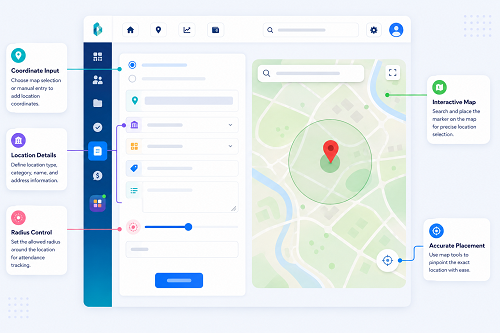
1. Create a Centralized Property Directory
The first step is to maintain a digital directory of properties and locations visited by employees.
Each property record can include:
- Property name
- Building or project
- Location
- Property type
- Assigned agent or employee
- Client or owner
- Scheduled visit
- Visit purpose
- Property manager
- Visit status
For companies managing large property portfolios, a centralized directory makes it easier to organize field assignments and track completed visits.
2. Assign Property Visits to Employees
Managers can create daily or weekly visit schedules based on employee responsibilities.
For example:
| Employee | Property | Visit Purpose | Scheduled Time |
|---|---|---|---|
| Agent A | Residential Tower | Property Viewing | 10:00 AM |
| Agent B | Commercial Building | Inspection | 11:30 AM |
| Agent C | Villa Community | Client Meeting | 2:00 PM |
This gives employees a clear schedule while allowing managers to compare planned visits with actual field activity.
3. Use Mobile Attendance for Field Employees
Real estate employees may not return to the office between property visits.
A mobile attendance application allows them to check in from an approved work location.
A typical process is:
Assigned Property → Employee Arrives → Mobile Check-In → Location Verification → Attendance Recorded
At the end of the working activity, the employee can check out or complete the assigned visit.
This provides a more practical attendance method for employees who spend much of their day in the field.
4. Verify Property Visits With Geo-Fenced Check-Ins
Geo-fencing can be used to verify that an employee is near the assigned property when checking in.
For example, a virtual boundary can be created around a property. When the agent checks in, the system verifies the device's location against the approved area.
This can help reduce:
- Remote attendance entries
- Incorrect property check-ins
- Unverified field visits
- Manual attendance reporting
GPS accuracy can vary because of building structures, device settings, network conditions, and other environmental factors. Therefore, an employee who checks in outside the boundary should generally be treated as an exception for review rather than automatically marked as non-compliant.
5. Record Property Visit Details
Attendance confirms presence, but property visits may also require additional information.
A mobile visit form can capture:
- Property visited
- Visit date and time
- Customer or client
- Visit purpose
- Property status
- Customer requirements
- Follow-up actions
- Notes
- Photos, where appropriate
- Visit outcome
For example, a sales agent completing a property viewing could record whether the customer was interested, requested a second viewing, or required additional information.
6. Track Planned Versus Completed Visits
Managers can compare scheduled property visits with completed visits.
For example:
- Planned Visits: 12
- Completed Visits: 10
- Missed Visits: 2
The system can then identify the reason for incomplete visits.
Possible reasons include:
- Customer cancellation
- Property access issue
- Agent reassignment
- Traffic delay
- Emergency meeting
- Scheduling conflict
This gives managers more useful information than simply counting attendance.
7. Connect Field Attendance With Daily Schedules
A real estate employee may have several appointments during one day.
For example:
Office → Property A → Property B → Client Meeting → Property C
A mobile workforce system can organize these activities into a daily schedule.
Managers can see:
- Assigned appointments
- Completed visits
- Pending visits
- Missed appointments
- Location exceptions
- Attendance status
This makes it easier to identify scheduling conflicts and redistribute assignments when necessary.
8. Track Travel Time as an Operational Metric
Travel between properties can consume a significant portion of a field employee's working day.
Companies can use check-in and check-out events to estimate the time between appointments.
For example:
- Property A Check-Out: 11:15 AM
- Property B Check-In: 11:50 AM
The 35-minute interval can be reviewed as a travel period where appropriate.
However, travel estimates should not automatically be treated as proof of employee productivity. Traffic, parking, building access, customer delays, and unexpected road conditions can affect travel time.
9. Manage Property Viewings Efficiently
Sales teams can use digital visit workflows to manage property viewings.
A typical process is:
Customer Appointment → Property Assignment → Agent Arrival → Mobile Check-In → Viewing → Customer Feedback → Follow-Up
The agent can record the outcome immediately rather than preparing a separate report later.
This creates a digital history of customer interactions and property visits.
10. Track Property Inspections
Property managers and inspection teams can use mobile attendance and checklists for routine inspections.
An inspection checklist may include:
- Unit condition
- Fixtures
- Electrical systems
- Plumbing
- Air conditioning
- Common areas
- Safety observations
- Maintenance issues
- Photos where appropriate
The inspection can be linked to the employee, property, date, and time.
This creates a structured record for property management teams.
11. Manage Multiple Communities and Locations
Large UAE real estate companies may operate across multiple communities, buildings, and developments.
A centralized system can organize properties by:
- Emirate
- Community
- Building
- Property type
- Portfolio
- Sales team
- Property management team
Managers can then review attendance and visit activity by location.
For example, a regional manager may compare field activity across different property portfolios without requiring employees to submit separate spreadsheets.
12. Handle Unplanned Property Visits
Not every field visit can be planned in advance.
Agents may receive:
- Urgent customer requests
- Last-minute viewing requests
- Property access issues
- Developer meetings
- Emergency inspections
- Follow-up visits
A mobile system can allow authorized employees to create or request an unplanned visit while maintaining a record of the reason.
This is preferable to forcing employees to create inaccurate scheduled visits simply to record attendance.
13. Monitor Attendance Exceptions
Managers can use exception-based monitoring instead of manually reviewing every field employee.
Useful alerts include:
- Missing check-in
- Missing check-out
- Late property arrival
- Check-in outside approved area
- Missed scheduled visit
- Unexpected property visit
- Overlapping appointments
- Extended gap between scheduled visits
Managers can investigate these exceptions based on context rather than assuming that every exception represents a problem.
14. Connect Field Attendance With Payroll
Real estate teams may have different working arrangements, including office-based employees, field agents, property managers, and support teams.
Attendance information can flow into payroll through:
Schedule → Mobile Attendance → Working Hours → Leave/Overtime → Payroll
This helps HR reconcile actual working hours and approved overtime before payroll processing.
Payroll calculations should be configured according to applicable UAE requirements, employment contracts, and company policies.
15. Integrate Property Visits With CRM Systems
For sales-focused real estate companies, attendance and visit tracking can become more valuable when connected to customer relationship management.
A possible workflow is:
Lead → Appointment → Property Visit → Check-In → Viewing → Customer Feedback → Follow-Up → Opportunity
This reduces duplicate data entry and helps managers understand how field activity relates to sales processes.
However, attendance information and customer information should be accessed only by authorized personnel.
16. Protect Employee Location Data
Real estate companies should carefully consider how employee location information is collected and used.
Good practices include:
- Explain why location information is collected.
- Limit location collection to legitimate business purposes.
- Prefer event-based location verification where continuous tracking is unnecessary.
- Restrict access to authorized managers.
- Secure stored and transmitted data.
- Establish suitable retention periods.
- Maintain access and change logs.
- Review third-party software and cloud-processing arrangements.
- Assess practices against applicable UAE privacy and data-protection requirements.
Location tracking should support workforce operations rather than become unnecessary continuous surveillance.
Best Practices for UAE Real Estate Companies
Real estate teams can improve field attendance and property visit management by:
- Maintaining a centralized property directory.
- Assigning visits through digital schedules.
- Using mobile attendance for field employees.
- Applying geo-fenced check-ins where appropriate.
- Recording visit details digitally.
- Comparing planned and completed visits.
- Managing unplanned visits through an approved workflow.
- Monitoring attendance and location exceptions.
- Connecting attendance with leave and payroll.
- Integrating visits with CRM workflows where useful.
- Protecting employee location information.
- Reviewing field KPIs regularly.
How Workforce Management Software Helps
A modern field workforce platform can bring attendance and property visit management into one workflow:
Property Assignment → Schedule → Mobile Check-In → Location Verification → Visit Details → Check-Out → Attendance → Payroll/CRM
Managers gain better visibility into where employees are scheduled, which properties they have visited, which appointments remain pending, and which exceptions require attention.
For companies operating across multiple locations, centralized dashboards can also help managers coordinate field teams without relying on paper forms, phone calls, or separate spreadsheets.
Conclusion
UAE real estate teams need flexible attendance solutions because much of their work happens away from the traditional office. Sales agents, property managers, inspectors, and leasing teams may visit multiple properties throughout the day, making conventional office attendance systems insufficient for field operations.
Mobile attendance, geo-fenced check-ins, digital visit forms, property schedules, exception alerts, and CRM integration can help real estate companies create a more accurate record of field activity.
The goal should not be to monitor employees continuously. Instead, companies should use purpose-driven attendance and property visit records to verify scheduled activities, improve workforce coordination, support payroll accuracy, and gain meaningful insight into field operations.
Property visits happen away from the office. InnBuilt Employee Tracking App can record UAE agents' assigned appointments and mobile attendance, helping managers distinguish field work from missed office punches.