How Can UAE Recruitment Agencies Reconcile Deployed Worker Hours With Client Timesheets?
How Can UAE Recruitment Agencies Reconcile Deployed Worker Hours With Client Timesheets?
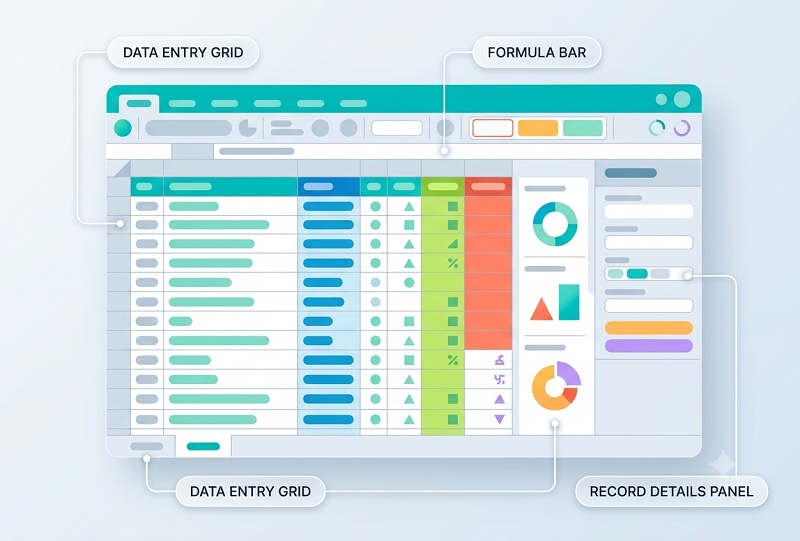
1. Establish a Standard Timesheet Reconciliation Process
Recruitment agencies should establish a consistent process for comparing worker attendance records with client-approved timesheets. This process should define when hours are submitted, who verifies them, how discrepancies are resolved, and when the final records are sent to payroll and billing teams.
A typical reconciliation workflow includes:
- Collect attendance data from deployed workers.
- Obtain timesheets from client supervisors.
- Match records by employee, client, worksite, date, and shift.
- Identify differences in recorded hours.
- Request clarification and supporting evidence.
- Approve the reconciled hours for payroll and invoicing.
A standard workflow helps prevent different branches or client accounts from following inconsistent procedures.
2. Capture Worker Attendance at the Actual Worksite
Recruitment agencies may deploy workers across multiple client locations, making attendance verification more complex than it is for employees working at one office.
Digital attendance tools can capture check-in and check-out times through approved mobile applications, biometric devices, or client-site terminals. Depending on the system, records may also include the assigned location, shift, and employee identification.
For example, if an agency deploys 40 warehouse workers to a client in Dubai and another 25 hospitality workers to a client in Abu Dhabi, each group should be linked to the correct worksite and assignment.
Agencies should define an appropriate attendance method for each client and communicate it clearly to deployed workers and supervisors. GPS or geofencing can provide additional location context where appropriate, but location data alone does not prove that a worker completed all assigned duties.
3. Match Attendance Records With Client Timesheets
The central reconciliation task is comparing the hours recorded by the agency's attendance system with those submitted or approved by the client.
The records should be matched using a consistent set of fields:
- Employee name or unique employee ID.
- Client account and worksite.
- Work date and scheduled shift.
- Clock-in and clock-out times.
- Recorded breaks.
- Regular and overtime hours.
- Client supervisor approval status.
Consider an example where an employee's attendance system records 8:02 AM to 5:06 PM, while the client timesheet records 8:00 AM to 5:00 PM. The discrepancy may result from rounding rules, a missed punch, or a difference in the way breaks are recorded.
The agency should apply the agreed calculation method and investigate material differences rather than automatically selecting one record as correct.
4. Define How Breaks, Overtime, and Shift Changes Are Calculated
Differences in time calculations are a common source of reconciliation problems. One client may record total time on site, while another records payable working hours after deducting breaks.
Recruitment agencies should document the rules that apply to each client, including:
- Whether breaks are paid or unpaid under the applicable arrangement.
- How overnight shifts are assigned to work dates.
- How early arrivals and late departures are treated.
- Who can approve overtime?
- How public-holiday and rest-day work is recorded.
- What rounding rules, if any, are contractually agreed.
For example, if a worker remains at a site for nine hours including a one-hour unpaid break, the total time on site is not necessarily the same as the payable working time.
Overtime should be checked against the employment arrangement, applicable law, and required approvals. An agency should not automatically remove hours simply because they exceed the original schedule if the work was performed and must be accounted for.
5. Create an Exception Management Process
Not every timesheet will match the attendance record perfectly. Recruitment agencies need a clear process for resolving discrepancies without delaying the entire payroll cycle.
Common exceptions include:
| Discrepancy | Recommended action |
|---|---|
| Missing check-in or check-out | Request an employee declaration and supervisor confirmation |
| Client records fewer hours | Compare shift records, break rules, and approved adjustments |
| Unapproved overtime | Verify whether the work was performed and follow the applicable approval and payment process |
| Wrong worksite or employee ID | Correct the assignment mapping and retain an audit trail |
| Client timesheet submitted late | Send reminders and escalate according to agreed deadlines |
| Duplicate timesheet entry | Verify the original record and remove the duplicate through a controlled correction |
Each exception should have an owner, a deadline, a status, and a documented resolution. This creates accountability and helps agencies identify recurring problems with particular clients or worksites.
6. Give Client Supervisors a Simple Approval Process
Client supervisors are often responsible for confirming that deployed workers attended their shifts and completed the expected hours. If approvals depend on email chains, paper forms, or multiple spreadsheets, timesheets can become difficult to track.
A digital approval workflow can allow authorised client representatives to review timesheets, confirm hours, flag discrepancies, and approve adjustments.
Recruitment agencies should agree with each client on:
- Timesheet submission frequency.
- The authorised approvers.
- The deadline for approving hours.
- The procedure for disputing entries.
- The escalation contact for overdue approvals.
Where practical, daily or weekly verification can help resolve issues before the end-of-month payroll and billing deadlines.
Client approval is an important control, but it should not replace the agency's responsibility to maintain accurate records and address legitimate worker concerns.
7. Connect Reconciled Hours to Payroll and Client Invoicing
Once hours have been verified, agencies can use the approved records to support payroll processing and client billing.
The payroll team may need verified regular hours, overtime, absences, leave, and applicable allowances. The billing team may use approved billable hours, contractual rates, and authorised additional charges.
These calculations are related but are not always identical. For example, some hours may be payable to a worker but disputed under a client contract. Such cases should be handled separately rather than allowing a commercial billing disagreement to automatically determine worker pay.
Integration between attendance, timesheet, payroll, and invoicing systems can reduce duplicate data entry and help prevent errors when information is transferred between departments.
Before finalising payroll or invoices, agencies should confirm that adjustments are supported, approved where required, and traceable to the original record.
8. Maintain Compliance and Protect Worker Records
Accurate timesheets support operational control, payroll administration, and the resolution of employment disputes. Recruitment agencies should retain records according to applicable legal, contractual, and internal retention requirements.
For UAE private-sector employment, the UAE Government identifies normal working hours generally as eight hours per day or 48 hours per week, subject to applicable exceptions. Ramadan working-hour rules and overtime provisions must also be considered where relevant. Agencies should verify the rules that apply to their workers and employment arrangements.
Agencies should also restrict access to attendance and timesheet records, protect personal information, and maintain a clear history of corrections and approvals.
A reliable audit trail should show the original entry, the change made, the person responsible, the reason for the change, and the date of approval. This supports transparency when a worker, client, payroll team, or auditor asks how a figure was calculated.
9. Monitor Reconciliation Performance With Reports
Recruitment agencies can improve their processes by tracking reconciliation performance across clients, branches, and worker categories.
Useful indicators include:
- Percentage of timesheets approved before the deadline.
- Number of hours disputed by clients.
- Frequency of missed attendance punches.
- Average time required to resolve discrepancies.
- Overtime requiring clarification.
- Payroll adjustments caused by timesheet errors.
- Invoice delays caused by missing approvals.
For example, if one client repeatedly submits timesheets late, the agency can introduce an earlier submission deadline or an automated reminder. If one worksite frequently reports missing clock-outs, the agency can review the attendance process and train workers and supervisors.
These reports help agencies address the root causes of discrepancies instead of repeatedly correcting the same problems each month.
Frequently Asked Questions
1. Why do recruitment agencies need to reconcile worker hours with client timesheets?
Reconciliation helps verify hours worked, support accurate payroll and client invoicing, identify discrepancies, and maintain reliable employment records.
2. What causes differences between attendance records and client timesheets?
Common causes include missed clock-ins, manual entry errors, different break calculations, shift changes, unapproved overtime, incorrect employee assignments, and inconsistent rounding rules.
3. Can attendance software automatically reconcile timesheets?
Some workforce management systems can compare attendance data with submitted timesheets and flag differences. Exceptions usually still require review by an authorised person.
4. What should an agency do if a client disputes a worker's hours?
The agency should compare the attendance record, client timesheet, shift assignment, and available supporting evidence. It should document the outcome and handle payroll and billing implications separately where necessary.
5. Should client approval determine the worker's payable hours?
Client approval is an important verification step, but it should not automatically override reliable evidence that work was performed or applicable employment requirements. Disputes should be investigated and handled under the relevant arrangements and law.
6. How often should timesheets be reconciled?
Daily or weekly checks can help resolve discrepancies early, while a final reconciliation should be completed according to the agency's payroll and invoicing deadlines.
7. How can software improve timesheet reconciliation?
Software can centralise attendance records, match employees to client assignments, automate reminders, flag mismatches, record approvals, and provide an audit trail for payroll and billing teams.
Conclusion
Reconciling deployed worker hours with client timesheets requires consistent attendance capture, clear calculation rules, timely client approvals, documented exception handling, and accurate transfer of verified hours into payroll and invoicing.
UAE recruitment agencies can improve this process by using attendance management and workforce software that connects employee assignments, shift records, client approvals, and audit trails. With a standard reconciliation workflow, agencies can reduce administrative errors, resolve disputes faster, strengthen client relationships, and maintain more reliable workforce records.
Client timesheets and agency records should reconcile. InnBuilt Attendance Software can help UAE recruitment agencies review deployed workers' site check-ins, approved hours and exceptions before billing.